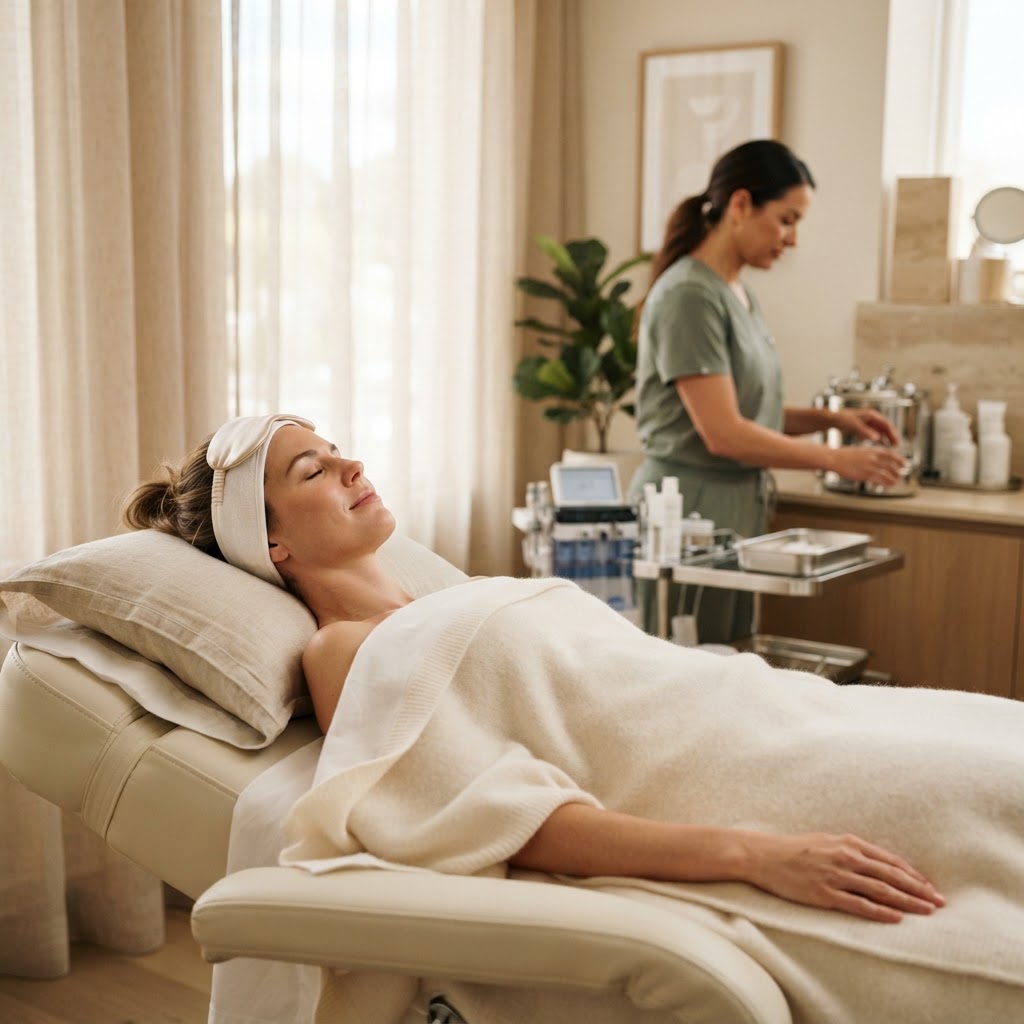
Chemical Peel vs Microneedling: Which Is Right for You?
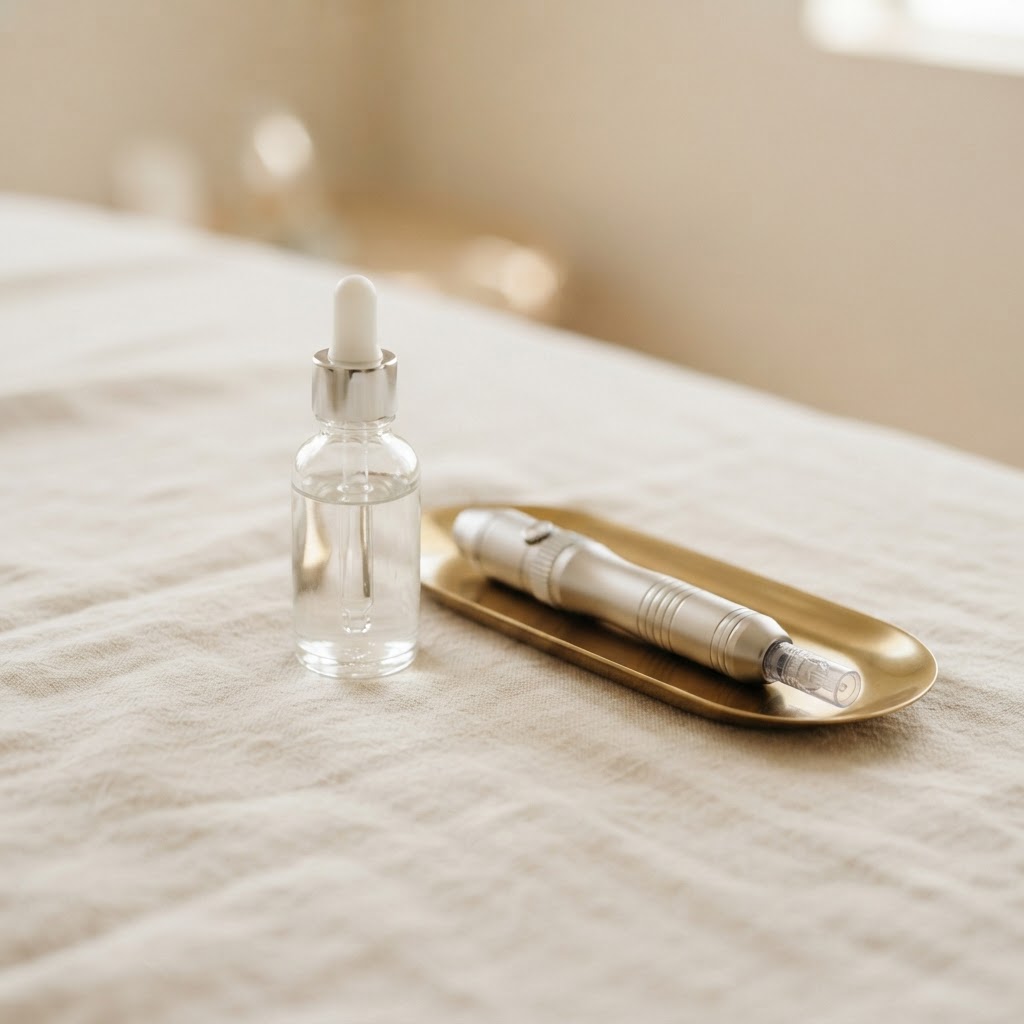
How They Work
Chemical peels use acid solutions to exfoliate the outer layers of the skin, accelerating cell turnover and revealing fresher skin underneath. The depth of the peel — superficial or medium — determines how much resurfacing occurs and how much downtime follows.
Microneedling (collagen induction therapy) uses fine needles to create controlled micro-channels in the skin. Rather than removing surface layers, it triggers the skin's repair response, stimulating collagen and elastin production from within.
Both improve texture, tone and radiance — but they work in opposite directions, and the right choice depends on your specific concerns.
The key difference: peels resurface the skin from the outside in, while microneedling rebuilds the skin from the inside out.
What Chemical Peels Are Best For
- Surface pigmentation and sun damage
- Acne and oily, congested skin
- Dull, rough skin texture
- Superficial fine lines
- Uneven skin tone
- Post-blemish marks
We offer a full range of chemical peels, from gentle options such as the Mandelic Acid Peel and Enzyme Peel through to deeper TCA resurfacing peels. Our guide to choosing the right chemical peel explains how depth and acid are matched to your skin.
What Microneedling Is Best For
- Acne scars and pitted scarring
- Deeper wrinkles and creases
- Skin laxity and loss of firmness
- Enlarged pores
- Stretch marks
- Post-acne marks and uneven texture
At HiSculpt we offer skin needling (collagen induction therapy) as a clinical treatment for texture and scarring concerns. See also our article on skin needling for acne scarring and how skin needling helps your skin.
Side-by-Side Comparison
| | Chemical Peel | Microneedling | | --- | --- | --- | | How it works | Chemical exfoliation of surface layers | Controlled micro-injury to stimulate collagen | | Best for | Pigmentation, congestion, dullness, texture | Scarring, laxity, pores, deeper lines | | Sensation | Warmth and tingling | Mild discomfort; numbing cream is used | | Downtime | None to light flaking for superficial peels; several days for medium-depth peels | 24 to 72 hours of mild redness and warmth | | Results appear | Within days for superficial peels; progressively over a course | Improvement builds over four to six weeks as collagen matures | | Typical course | Varies by peel depth and concern | Three to six sessions spaced four to six weeks apart |
Can You Combine Them?
Often, yes — and many practitioners recommend it, because the two treatments address different layers of the skin. A peel can be performed two to three weeks after microneedling (or vice versa) to address both surface and structural concerns.
Timing matters and is planned individually: your practitioner will design a sequence that allows proper healing between treatments, and will take your sun exposure, events and current skincare routine into account.
Which Should You Choose?
A useful way to think about it:
- If your concern is on the surface — pigmentation, congestion, dullness, roughness — a peel is often the more direct route
- If your concern is structural — scarring, laxity, deep lines, pores — microneedling is often more appropriate
- If you have both, a planned combination may deliver more than either treatment alone
Your skin condition, sensitivity, tone, downtime tolerance and timeline all affect the recommendation. This is exactly what a professional assessment is for.
Before and Aftercare
Before either treatment:
- Pause retinoids, AHAs, BHAs and benzoyl peroxide for the period your practitioner advises
- Avoid waxing, laser and other treatments in the area beforehand
- Avoid sun exposure and sunburn; no fake tan
- Disclose medications, cold sores, and pregnancy or breastfeeding
After either treatment:
- SPF 50+ daily is essential
- Keep the routine simple with a gentle cleanser and moisturiser
- Do not pick or peel flaking skin
- Pause active ingredients for as long as advised
- Avoid saunas, steam and intense exercise while the skin is settling
Important: individual responses vary, and results cannot be guaranteed. Suitability for either treatment is determined following a professional skin assessment.
Making Your Decision
The most reliable way to choose is a consultation, where your practitioner assesses your skin and recommends the treatment — or combination — that suits your concerns. At HiSculpt Aesthetics in Noble Park, Melbourne, both peels and skin needling are available, so the recommendation is based on your skin rather than on what happens to be offered.
Frequently Asked Questions
Written By
Dafni
Dafni is the founder and lead practitioner at HiSculpt Aesthetics, specialising in advanced skin and body treatments with over a decade of experience in medical aesthetics.
Your Transformation Starts Here
Ready to transform your skin?
Book a personalised consultation at HiSculpt Aesthetics and receive a customised treatment plan tailored to your skin or body goals.