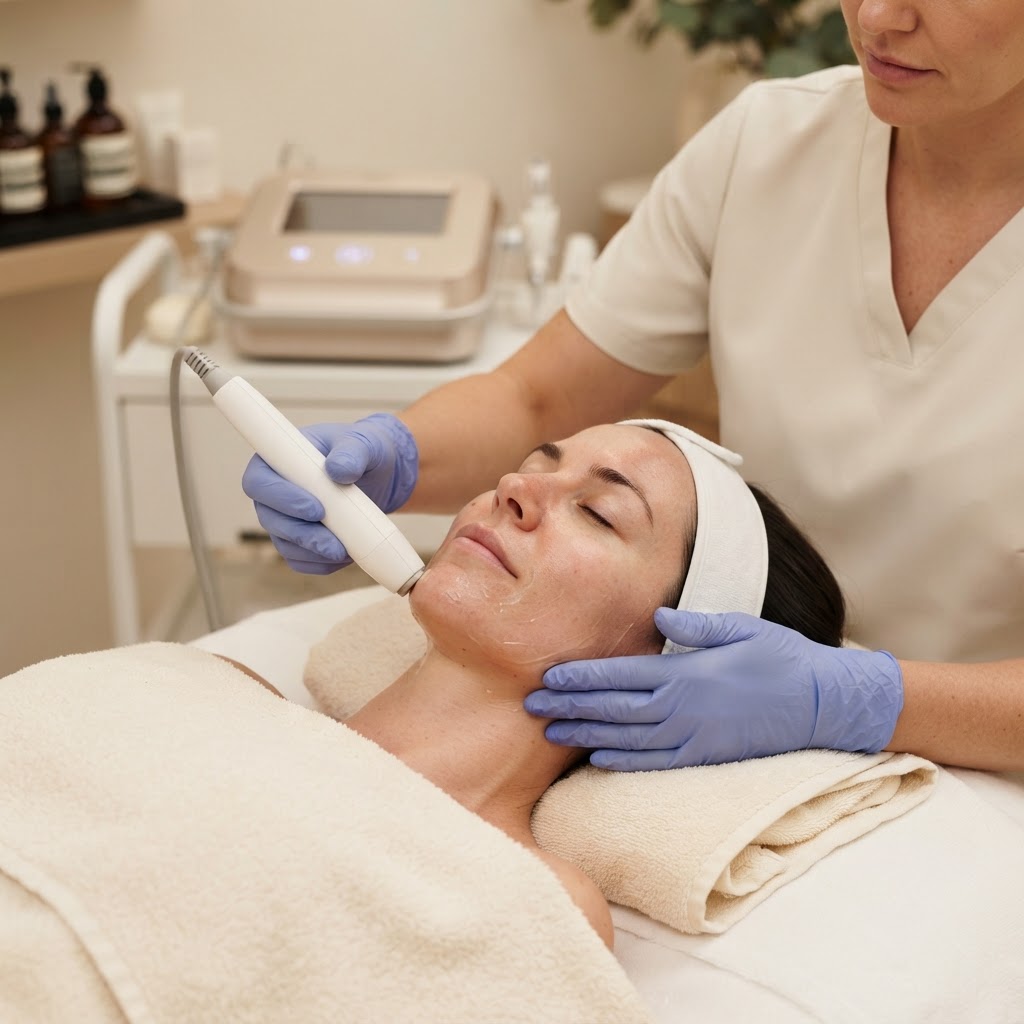
HIFU for the Lower Face: How It Works for Skin Tightening & Jawline Definition
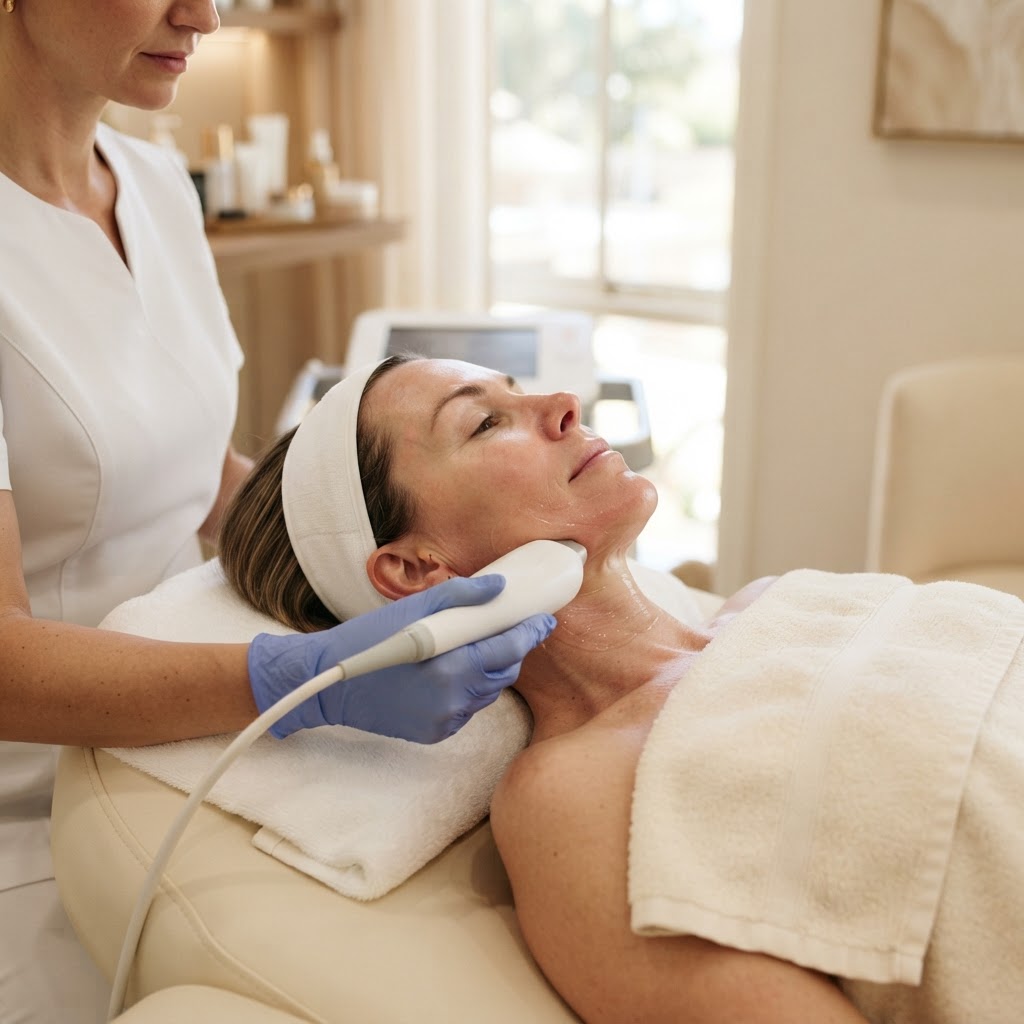
Why the Lower Face Is So Often the First Area to Change
Early signs of ageing rarely arrive all at once. For many people, the lower face is where they first notice a difference: a jawline that is slightly less crisp, a softening around the mouth, or a tired look that does not seem to improve with rest.
This area is also where treatment planning needs the most care. The lower face contains muscles, subcutaneous fat, salivary glands and the jawbone, and the skin here is thinner than it appears. That is why professional assessment matters more here than in almost any other area of the face.
What HIFU Is
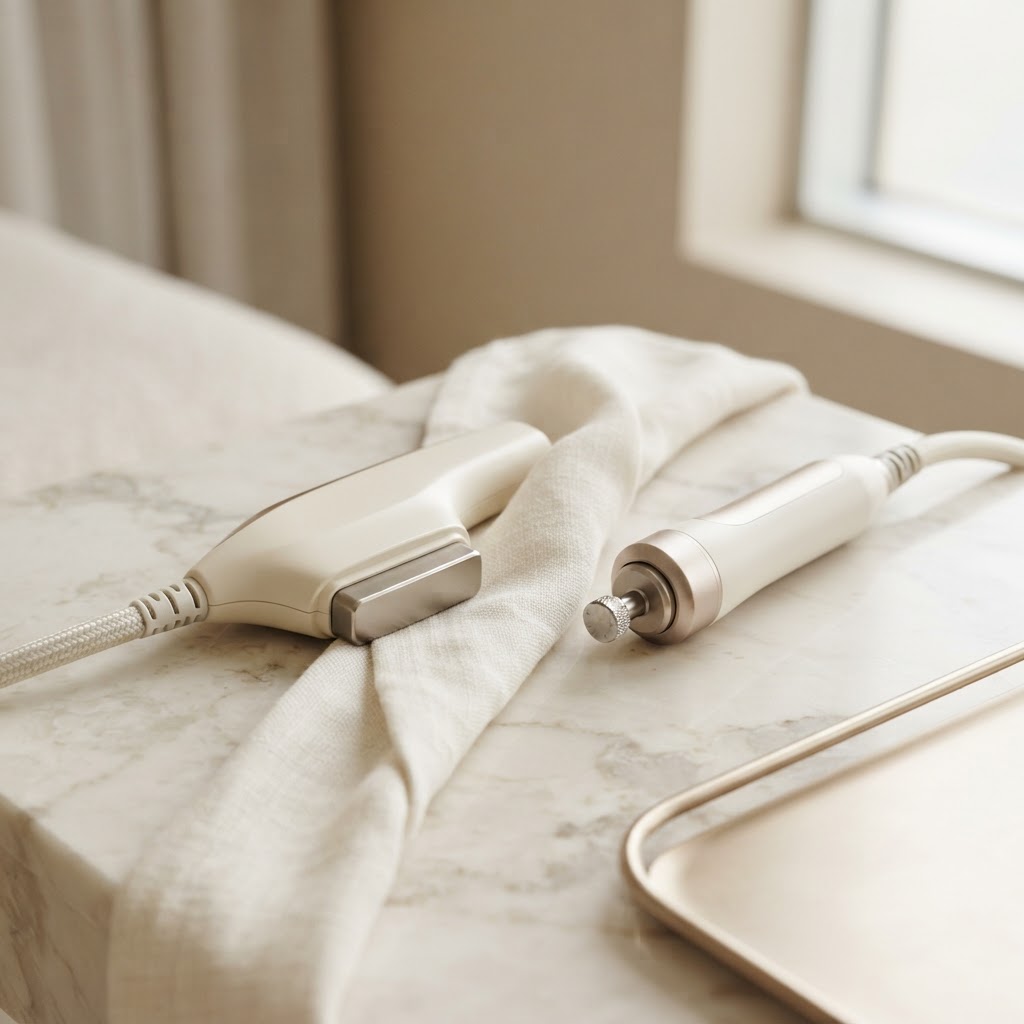
HIFU stands for High-Intensity Focused Ultrasound. It is a non-surgical treatment that delivers focused ultrasound energy to precise depths beneath the skin. Rather than heating the surface broadly, HIFU concentrates energy at specific points below the skin, leaving the surface largely untouched.
At HiSculpt Aesthetics in Noble Park, Melbourne, HIFU forms part of our skin tightening offering, including targeted lower face and jawline treatments.
How HIFU Works Beneath the Skin
Think of a magnifying glass focusing sunlight to a single point. HIFU works in a similar way: ultrasound energy converges at a chosen depth, creating small, controlled points of heat. These points trigger the body's own wound-healing response, which includes the production of fresh collagen.
A full-face HIFU treatment is mapped to reach the deeper supporting layers of the face, including the SMAS — the same foundational layer surgeons address during a facelift. For a targeted lower face treatment, your practitioner selects depths suited to your anatomy and concerns.
Collagen remodelling is not instant. It is a gradual biological process that continues for months after the treatment.
Timeline to keep in mind: initial tightening is often noticed around four weeks, with results continuing to develop over three to six months as collagen matures.
What HIFU Is Not
Being clear about limits is part of good practice:
- HIFU is not surgery and cannot reproduce the results of a surgical facelift
- It is not a dermal filler — it does not restore volume
- It is not a fat-dissolving treatment — though it can be used on the body to address skin laxity, it is not designed to remove fat
If your main concern is significant excess or inelastic skin, a surgical opinion may be more appropriate, and we will say so.
Who May Consider HIFU for the Lower Face
- Mild to moderate skin laxity in the lower face
- A jawline that has become less defined
- Early jowling or a softening of the chin and jaw contour
- A tired or heavy look in the lower face
- Clients wanting a natural-looking, non-surgical approach with no downtime
Suitability is confirmed at consultation, following a skin and facial assessment.
Who It May Not Suit
HIFU is not appropriate for everyone. It is generally avoided during pregnancy and breastfeeding, and in areas with open lesions or active infection, metal implants, or severe active acne and cysts. Your practitioner will review your medical history, medications and previous treatments before proceeding.
What to Expect at Your Appointment
- Consultation and mapping — your concerns, anatomy and history are reviewed, and the treatment area is mapped
- Treatment — focused ultrasound pulses are delivered methodically across the mapped area
- Sensation — most clients describe deep warmth and short pulses, and short breaks can be taken if needed
- Afterwards — you can return to your day immediately
Often a single treatment is sufficient, with results typically lasting 12 to 18 months. Your practitioner will confirm whether one session or an additional treatment is right for you.
Downtime and Aftercare
There is no downtime. Mild pinkness and warmth may last a few hours, and some clients notice temporary tenderness in the treated area. Simple aftercare supports your skin:
- Keep the skin hydrated with gentle, non-active products
- Use SPF 50+ daily
- Avoid extreme heat — saunas, steam rooms and very hot showers — for the period your practitioner advises
- Avoid strenuous facial massage and strong active ingredients while the skin is settling
- Attend your review appointment so progress can be assessed
Results and Maintenance
HIFU results build quietly. Some clients notice a change within weeks; the more significant improvement tends to appear over three to six months. Because the effect comes from your own collagen, it looks natural rather than filled or frozen.
Maintenance is individual. A repeat treatment every 12 to 18 months is common, though your practitioner may recommend a different interval based on your skin, lifestyle and goals.
Combining HIFU With Other Treatments
HIFU addresses deeper laxity. Other technologies work at different levels, and combining approaches is often discussed at consultation:
- Radiofrequency for surface firmness, tone and texture
- Skin needling for texture, pores and scarring
- Body technologies for laxity and contour elsewhere on the body
Combinations are planned individually, with spacing between treatments so the skin recovers properly. Read more about how the two main tightening technologies differ in our guide to HIFU vs RF skin tightening.
HIFU for the Lower Face at HiSculpt Aesthetics
We offer Lower Face Tightening (HIFU), full face HIFU, neck tightening and double chin HIFU at our Noble Park clinic. Each treatment begins with an assessment, and we will tell you honestly whether HIFU is the right approach for your concerns or whether another option would serve you better.
Frequently Asked Questions
Written By
Dafni
Dafni is the founder and lead practitioner at HiSculpt Aesthetics, specialising in advanced skin and body treatments with over a decade of experience in medical aesthetics.
Your Transformation Starts Here
Ready to transform your skin?
Book a personalised consultation at HiSculpt Aesthetics and receive a customised treatment plan tailored to your skin or body goals.