What Is Radiofrequency Skin Tightening and How Does It Work?
What Radiofrequency Skin Tightening Is
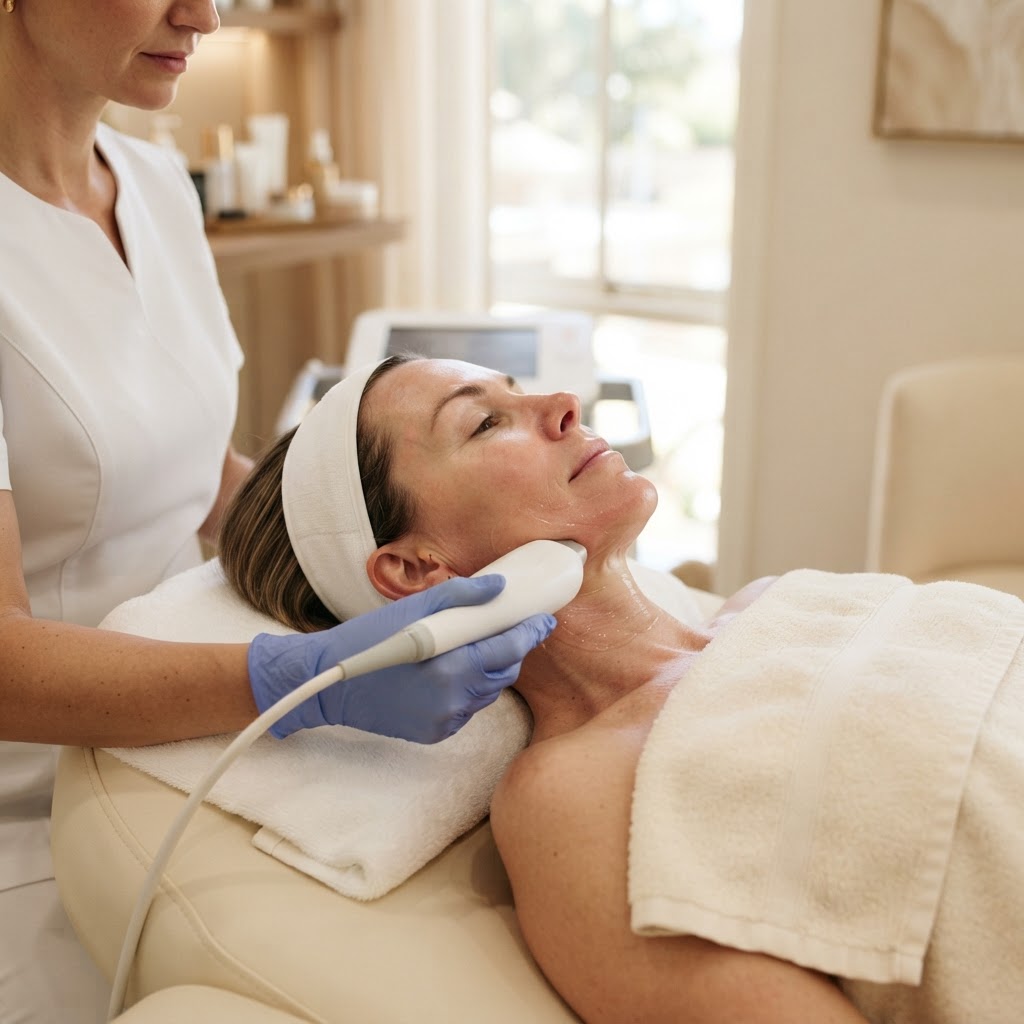
Radiofrequency (RF) skin tightening is a non-surgical treatment that uses controlled radiofrequency energy to heat the deeper layers of the skin. The heat stimulates the skin's own repair response, which includes the production of new collagen and elastin.
It is one of the most established technologies in non-surgical aesthetics. It is comfortable, requires no downtime, and is used on both the face and the body.
How RF Works
- The skin is cleansed and a conductive gel is applied to allow energy to pass evenly
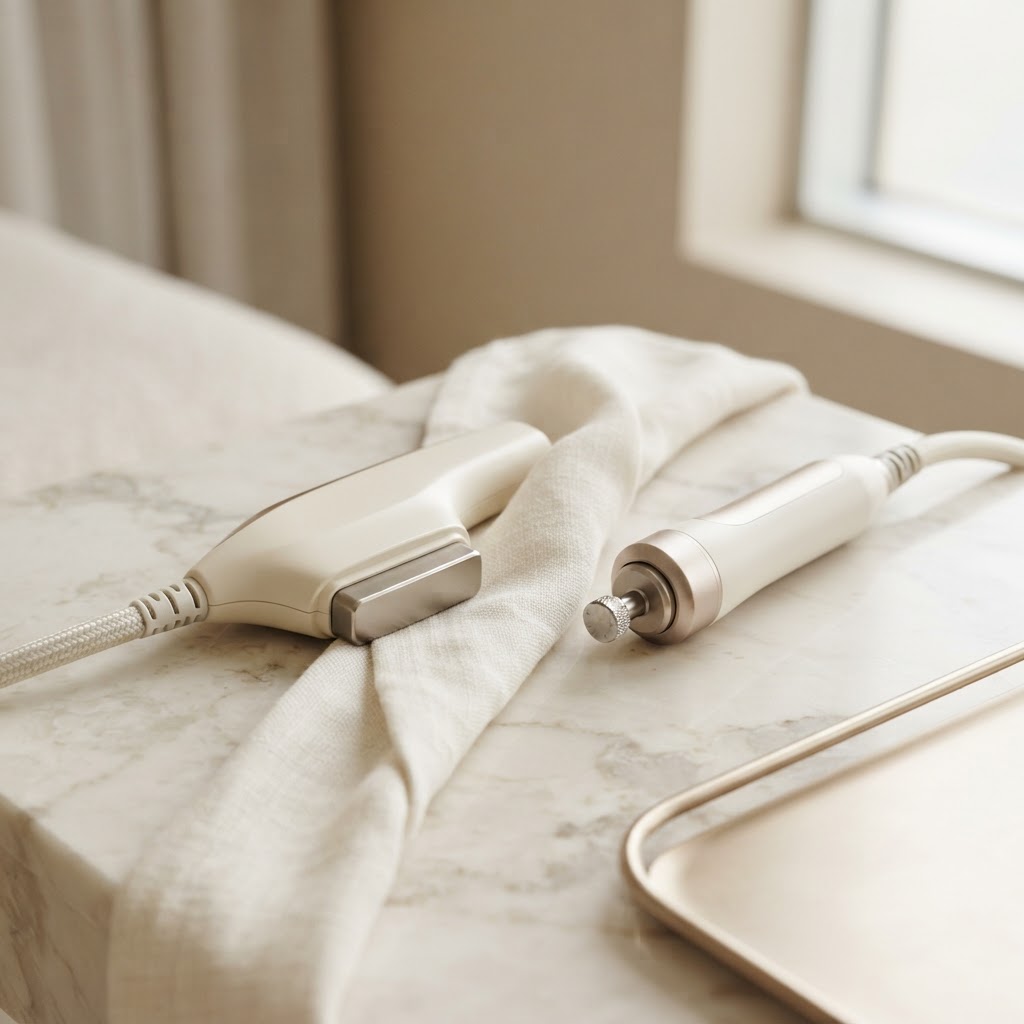
- A handpiece is moved over the area in gentle, measured passes
- Controlled heat reaches the dermis — the middle layer of the skin, where collagen and elastin reside
- The skin responds by remodelling and producing new collagen over the following weeks
Because the handpiece is continually moving, the heat is delivered evenly rather than concentrated at a single point. Most clients describe the sensation as a comfortable, deep warmth.
Collagen production is a gradual biological process, so RF delivers two different things at once: a temporary tightening effect that many clients notice straight away, and a longer-term improvement in firmness and texture as new collagen matures over the following six to twelve weeks.
Facial RF and Body RF
The same principle applies across the body, with different protocols depending on the area and the goal:
- ThermaLift RF Facial for the face and neck, typically as a course of four to six weekly sessions
- RF Body Tightening for areas such as the abdomen, thighs and arms, typically a course of six to eight weekly sessions with quarterly maintenance
What RF May Help With
- Early signs of ageing and mild skin laxity
- Fine lines and crepey texture
- Overall firmness and skin tone
- Dullness and surface texture
- Skin laxity on the body, including after weight change
It is not a replacement for surgery, and it does not restore volume in the way that dermal fillers do. Where laxity is significant, a surgical opinion may be more appropriate — and we will tell you that at consultation.
Important: individual responses vary, and results cannot be guaranteed. Suitability is determined following a professional skin assessment.
Who May Consider RF
- Clients noticing early laxity or a loss of firmness
- Anyone wanting smoother texture and a more even tone
- Clients who prefer a treatment with no downtime
- Those who are not ready for, or not interested in, surgery
- Clients looking to maintain results between other treatments
Who It May Not Suit
RF is generally avoided during pregnancy and breastfeeding, and in areas with a pacemaker or other implanted electronic device, metal implants, or active skin infection. Your practitioner will review your history and medications before treatment.
What to Expect at Your Appointment
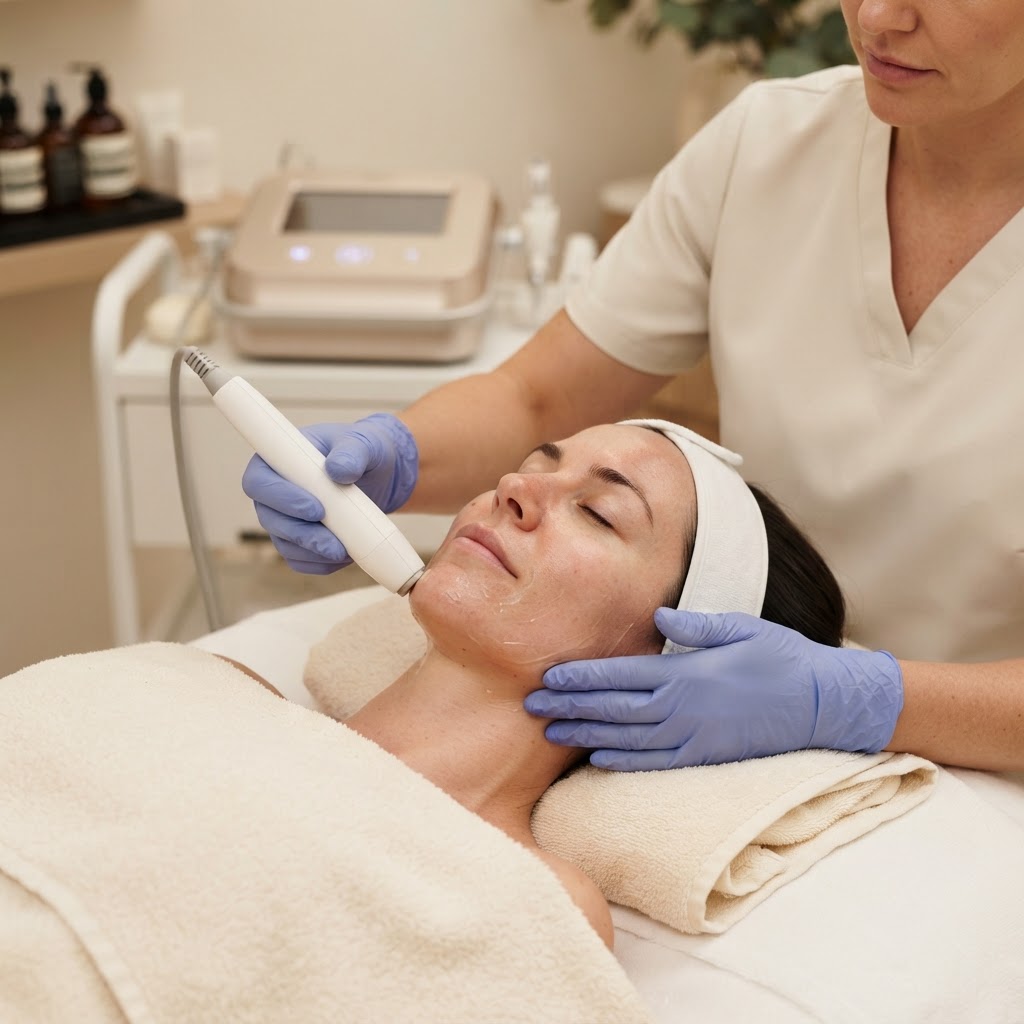
Your practitioner will begin with an assessment, then cleanse the skin and apply conductive gel. The handpiece is moved over the treatment area, and you will feel a steady, warming sensation. After the passes are complete, the gel is removed and the treatment finishes with hydrating care and sun protection. You can return to your day immediately.
Downtime and Aftercare
There is no downtime with RF. Some clients notice mild pinkness and warmth for a short time afterwards. Simple aftercare:
- Use SPF 50+ daily
- Keep the skin hydrated and avoid strong actives while the skin is settling
- Avoid saunas, steam rooms and very hot showers on the day of treatment
- Follow any specific guidance your practitioner provides for your skin
Results and Maintenance
Immediate tightening is often noticed, with continued improvement over six to twelve weeks as collagen matures. A course of sessions is usually required for the best outcome, and maintenance sessions help sustain the result over time.
RF vs HIFU — What Is the Difference?
Both technologies stimulate collagen, but they work at different depths:
- HIFU delivers focused ultrasound to precise, deeper points — including the SMAS layer — and is often chosen for deeper laxity and a lifting effect
- RF heats the dermis more broadly and is often chosen for surface firmness, fine lines and texture
They can also be complementary, with HIFU addressing deeper support and RF refining the surface. Our guide to HIFU vs RF skin tightening explains the difference in detail, and our article on HIFU for the lower face and jawline covers how focused ultrasound is applied to that area specifically.
Radiofrequency at HiSculpt Aesthetics
We offer facial and body RF at our clinic in Noble Park, Melbourne, as part of our skin tightening treatments. If you are unsure whether RF, HIFU or a combination is the better fit for your concerns, a consultation will give you a clear answer based on your skin rather than on a general recommendation.
Frequently Asked Questions
Written By
Dafni
Dafni is the founder and lead practitioner at HiSculpt Aesthetics, specialising in advanced skin and body treatments with over a decade of experience in medical aesthetics.
Your Transformation Starts Here
Ready to transform your skin?
Book a personalised consultation at HiSculpt Aesthetics and receive a customised treatment plan tailored to your skin or body goals.